
Strengthen biosecurity at
barn and production entries
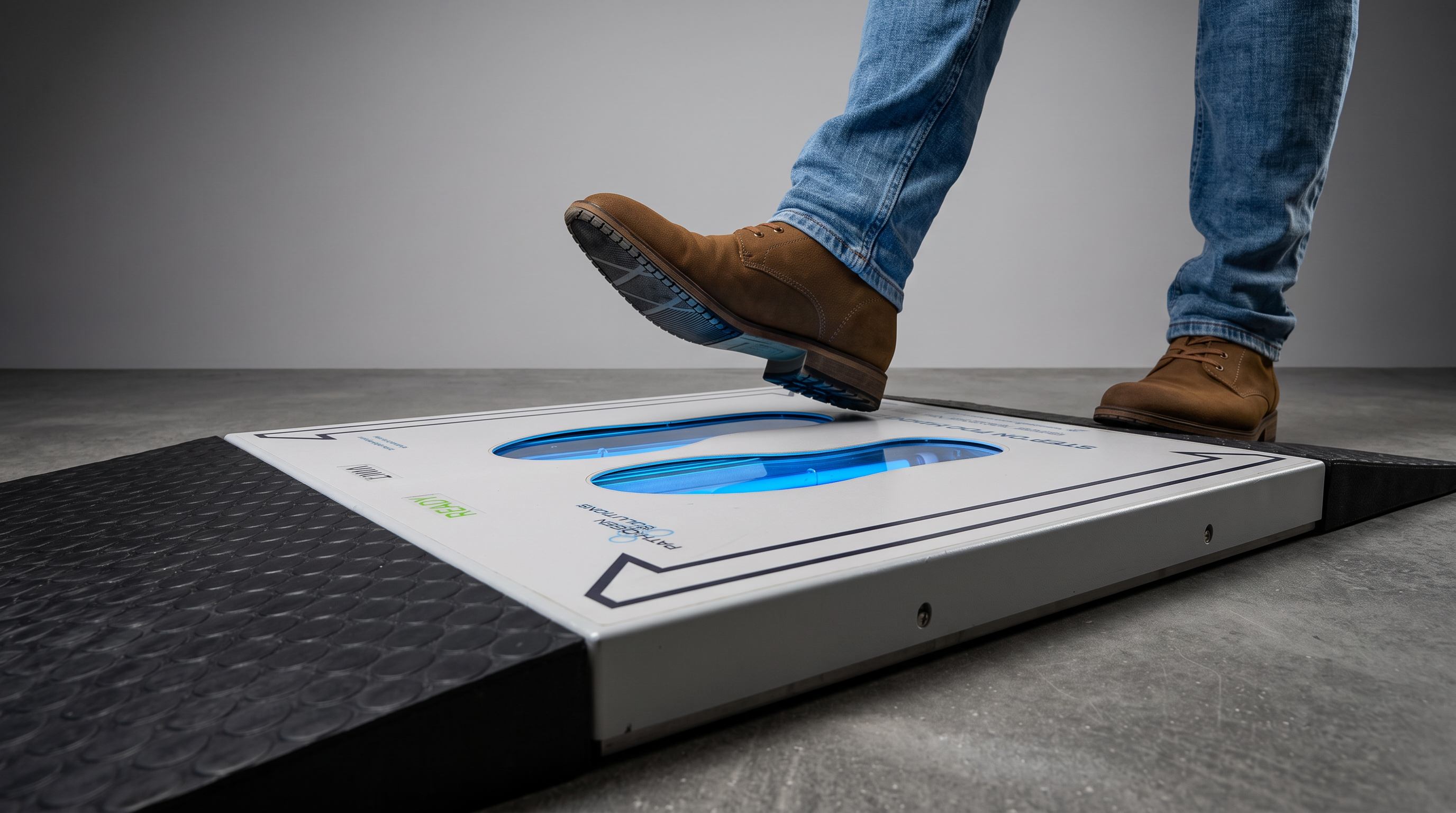
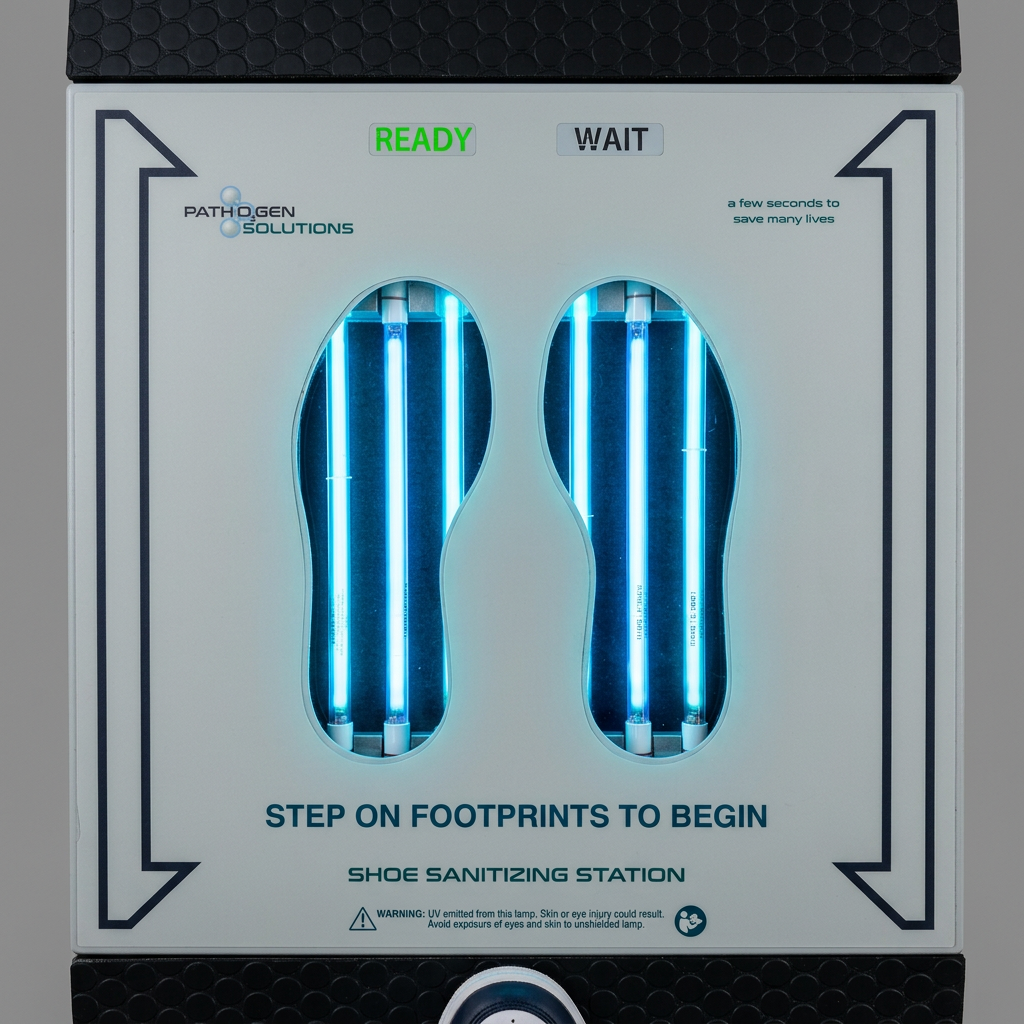
Our commercial footwear sanitizing station uses UV-C and ozone to sanitize both shoe soles in a 6, 8, or 10 second cycle. We provide placement information, product specifications, and approved laboratory results for your evaluation.
Employees, veterinarians, service crews, and visitors can carry microorganisms between outdoor areas, animal housing, feed operations, processing areas, and separate production zones. UVZone® provides a dry, automated shoe and boot treatment at designated biosecurity transitions and can reduce reliance on chemical footbaths that require mixing, concentration checks, solution replacement, cleaning, and disposal.
Looking at food plant entries?How UVZone® fits animal agriculture entry protocols
We help your team identify barn, housing, feed, and production entries where a timed shoe-sole step fits your biosecurity procedure, traffic flow, and available floor space.
Dry shoe and boot treatment at biosecurity transitions
UVZone® provides a dry, automated shoe and boot treatment at designated biosecurity transitions. The station can reduce reliance on chemical footbaths that require mixing, concentration checks, solution replacement, cleaning, and disposal.
Movement between outdoor and controlled production zones
Employees, veterinarians, service crews, and visitors can carry microorganisms between outdoor areas, animal housing, feed operations, processing areas, and separate production zones. UVZone® adds a repeatable footwear step at the entries your team defines.
Support for bioexclusion and biocontainment procedures
We help poultry, swine, dairy, cattle, veterinary, and feed operations identify entry points where UVZone® can support bioexclusion and biocontainment procedures while your team keeps the wet chemistry or cover steps your program requires.
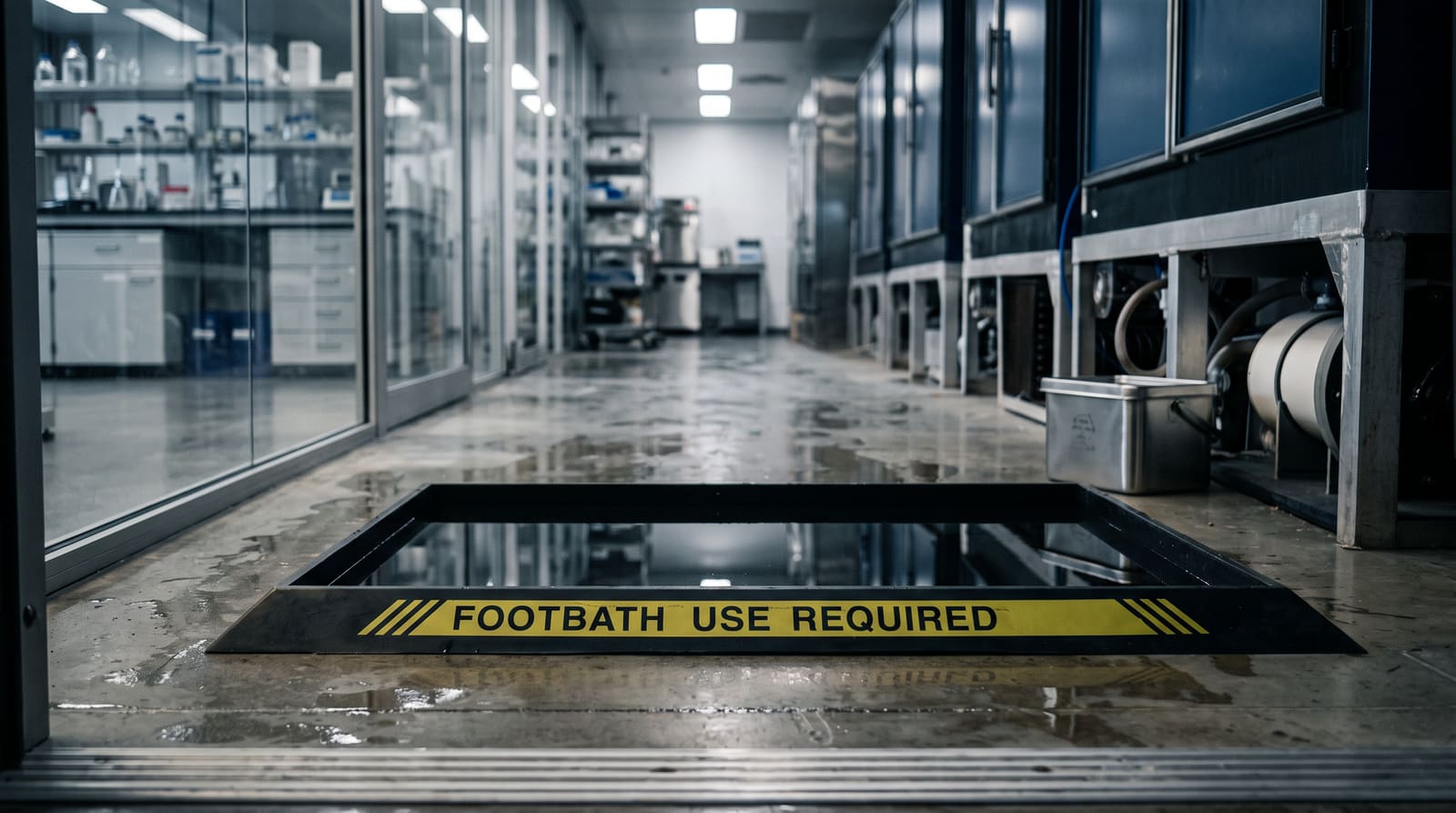 Chemical footbaths at entry
Compare your current footbath process with UVZone®
Chemical footbaths require mixing, concentration checks, solution replacement, cleaning, and disposal at each participating entry. UVZone® uses fixed equipment and an automatic timed cycle, so its operation does not require solution preparation or liquid disposal at the door. We can compare both operating models with your team while keeping wet chemistry where your biosecurity program requires it.
Common placements in animal agriculture
Start with biosecurity transitions where personnel already follow a defined footwear or footbath procedure. We will review floor space, traffic pattern, door movement, and nearby power before recommending placement.
Entries to review for station placement
8 entry types
- 01
Door 01
Barn entrances
- 02
Door 02
Animal housing transitions
- 03
Door 03
Veterinary areas
- 04
Door 04
Hatcheries
- 05
Door 05
Feed mills
- 06
Door 06
Employee entries
- 07
Door 07
Visitor entries
- 08
Door 08
Movement points between production zones
Food organism testing
Independent laboratory results
for food organisms
We show the reported reduction with the tested organism, exact cycle time, laboratory conditions, laboratory, and report ID. Results may vary by application conditions.
Salmonella enterica
Microchem Laboratory · report NG19887 · glass carriers simulating shoe soles under modified ASTM E1153 laboratory conditions
>99.998%
6 seconds
Listeria monocytogenes
Microchem Laboratory · report NG19887 · glass carriers simulating shoe soles under modified ASTM E1153 laboratory conditions
>99.994%
8 seconds
Cronobacter sakazakii
Microchem Laboratory · report NG19887 · glass carriers simulating shoe soles under modified ASTM E1153 laboratory conditions
>99.991%
6 seconds
Published customer compliance result
56% to 96%
Published hygiene compliance change. Reported over approximately six months at the Canyon, TX facility.
“The UVZone shoe sanitizing stations when strategically placed at our Canyon, TX facility have helped drive measurable compliance in other activities like hand washing.”
Published hygiene compliance change
56% to 96%
Reported over approximately six months at the Canyon, TX facility.
Product operation, components, and maintenance
Use these published specifications with the station dimensions and electrical requirements when your team reviews the product. Ask us for current maintenance instructions and replacement component information before installation.
Facility preparation
Station dimensions and
electrical requirements
UVZone® measures 24 by 24 inches and sits 2 inches above the floor. It uses 120-240VAC, 50-60Hz, 1.2A with a 10 feet power cord. We recommend reviewing the walking path, door swing, threshold, and outlet location before placement.
- Station dimensions
- 24" × 24" × 2"h
- Station weight
- 33 lb
- Weight capacity
- up to 400 lb
- Electrical input
- 120-240VAC, 50-60Hz, 1.2A
- Power cord length
- 10 ft
Review your entries
with our team
A focused entry review lets your team see how UVZone® fits the doorway, traffic pattern, power location, and sanitation process before you add more stations.
Tell us which entries you are reviewing
Tell us about barn, housing, feed, hatchery, or production-zone transitions you want to review.
Confirm the doorway fit and daily operation
We will review where the station sits and a 6, 8, or 10 second cycle within your bioexclusion and biocontainment procedures.
Review the entries with your team
Use the traffic observations, environmental monitoring, quality records, and operating measures your facility already reviews to decide whether additional stations make sense.
Start with your facility
Lets talk foot traffic!
Tell us where employees, visitors, contractors, or production personnel enter the areas you need to protect. We will review your current use of covers, chemical mats, dedicated footwear, and other entry controls with you.
Call our team727-300-1069Inquire about UVZone®
Share your name, company, and contact details. Our team will follow up about your facility and entry needs.
Your information will be used to respond to your request and will not be sold.