
Compare Disposable Shoe Covers and Dispensers
With Our UVZone® Footwear Sanitizing Station
Compare entry requirements
Station and current process
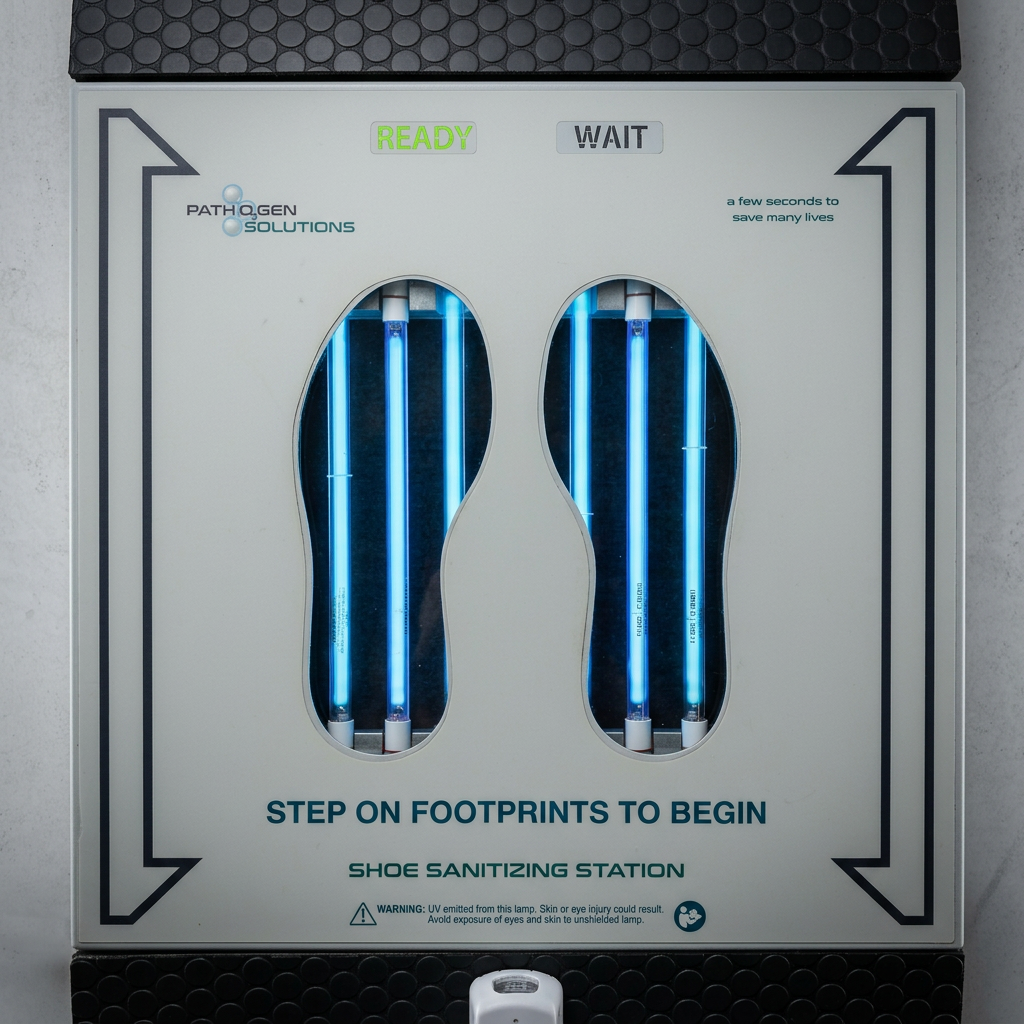
UVZone® is a fixed footwear-treatment station for selected facility entry points. UV-C light and ozone treat both shoe soles during an automatic 6, 8, or 10-second cycle.
We work with commercial facilities reviewing employee entrances, controlled transitions, gowning areas, cleanrooms, production areas, laboratories and other selected entry points.
START WITH YOUR COVER REQUIREMENT
Tell Us Why Your Facility Requires Disposable Covers
We start with why your facility requires covers. Disposable shoe covers create a temporary barrier over footwear. Our UVZone® station treats shoe sole surfaces during an activated treatment cycle. Those are different jobs, so we need to understand your cover requirement before we compare options.
If your approved procedure requires a physical barrier, garbing step or personal protective equipment, that requirement remains in place. We can help you evaluate UVZone® as a shoe-sole treatment step at an appropriate entry within your broader facility process.
When covers stay required as PPE
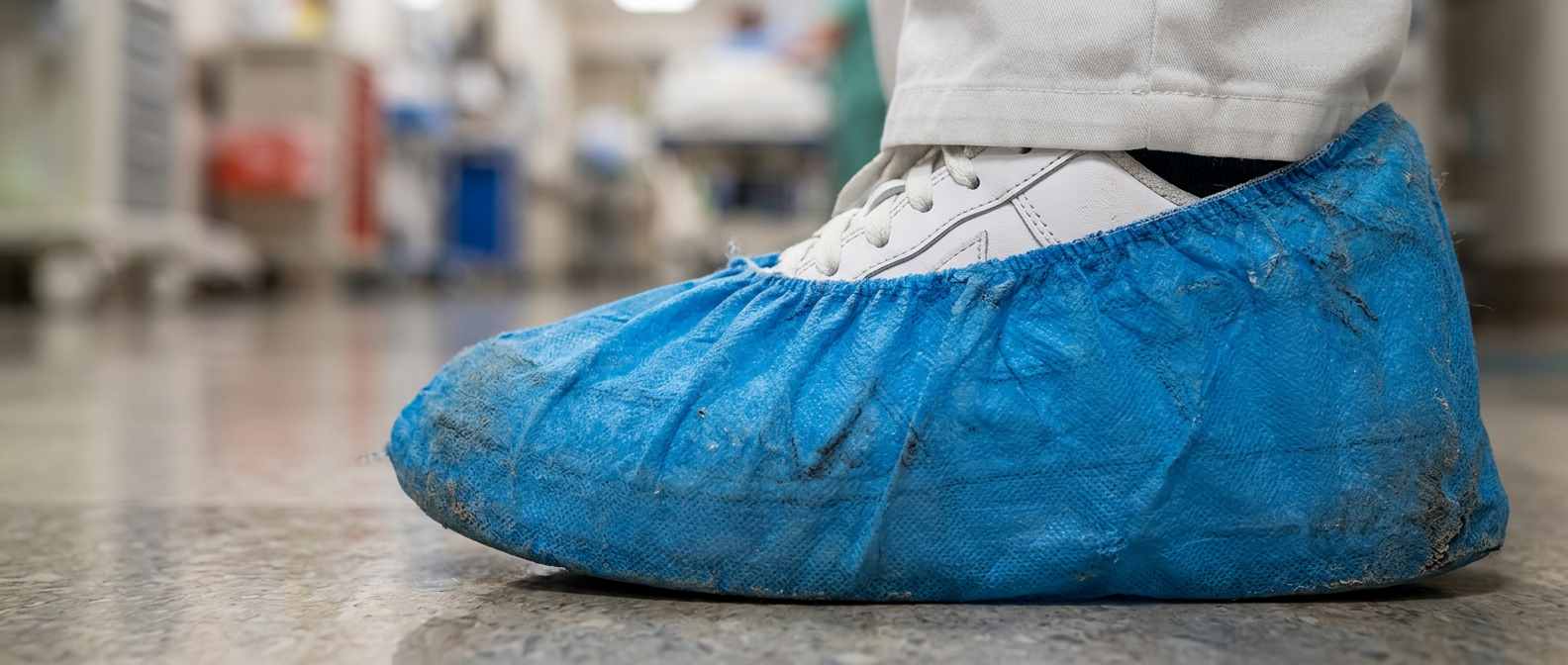
Your facility must continue every shoe cover, boot cover, garbing step and PPE requirement in your approved procedures. We do not ask you to drop required controls.
When covers support your footwear-control process
Your team may review whether our UVZone® station can add an automated shoe-sole treatment step at a selected entry. Your responsible facility team still decides whether any existing procedure can change.
When entries have different rules
You may require disposable covers at one transition and evaluate our fixed footwear-treatment station at another. We help you compare the right approach for each entry, traffic pattern and approved procedure.
Compare recurring shoe cover purchasing, stocking, labor and disposal with UVZone®.
WHAT YOU MANAGE TODAY
Every Disposable Cover Must Be Purchased, Stocked, Applied and Disposed Of
Your disposable shoe-cover process depends on having the correct supplies available and on each user following the procedure for that entry every time someone enters or exits.
As personnel volume, shifts and controlled entries increase, we see facilities manage more inventory, storage, restocking, handling and waste. That is the process we compare against UVZone®.
Burden 1
Your team maintains cover inventory.
You purchase the required cover types and sizes, store them appropriately and keep enough on hand for personnel, visitors and contractors at each participating entry.
Burden 2
Each entry stays stocked.
Covers must be available where personnel apply them. Your team monitors inventory and restocks before supplies run out.
Burden 3
Every user follows the cover procedure.
Each cover must be applied, worn, removed and handled according to the procedure for that entry. Torn, damaged or misapplied covers may require replacement.
Burden 4
Used covers must be collected and discarded.
Your facility needs a process for removing, collecting and disposing of used covers. Waste grows with user volume, entry count and cover changes.
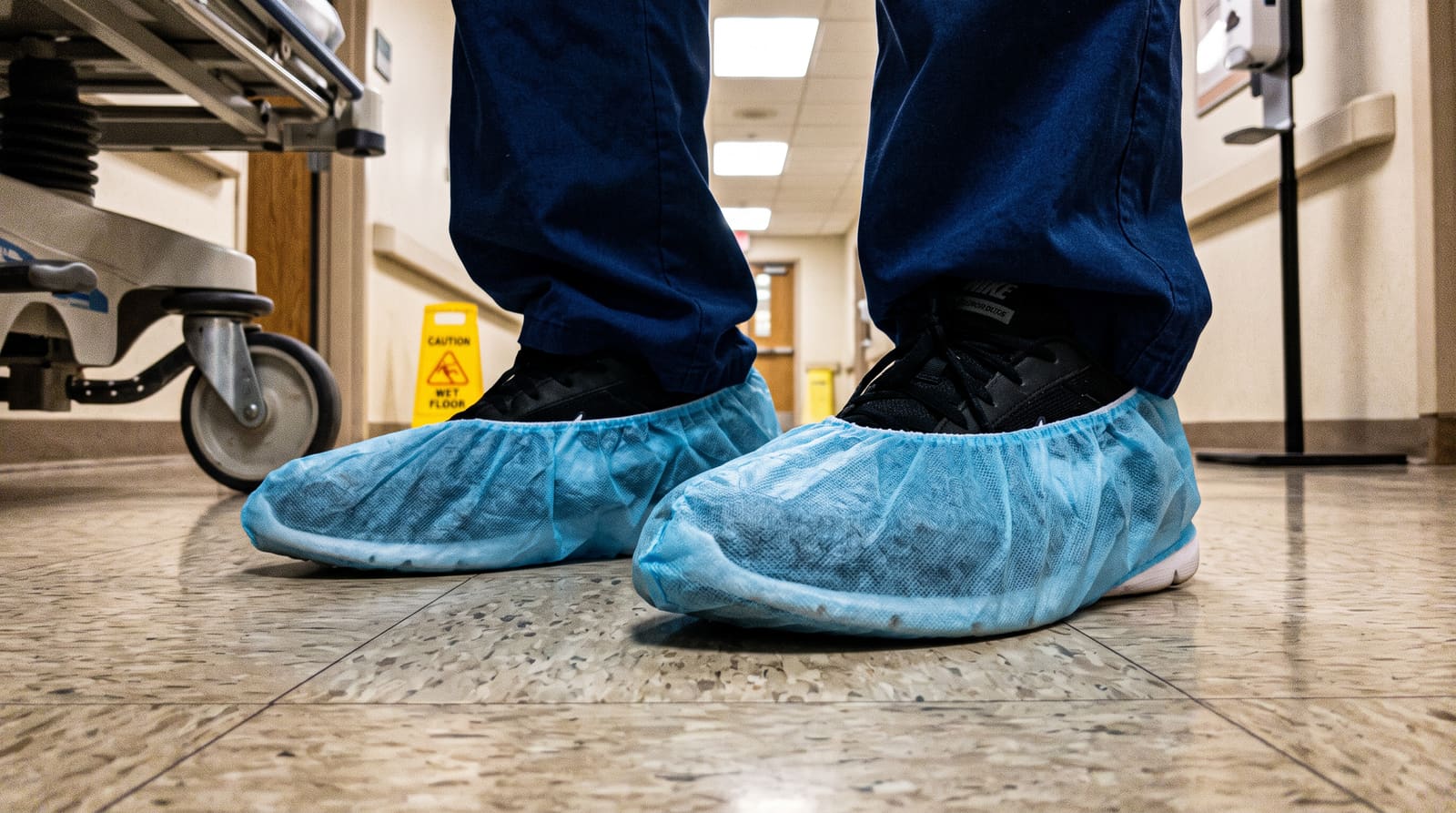
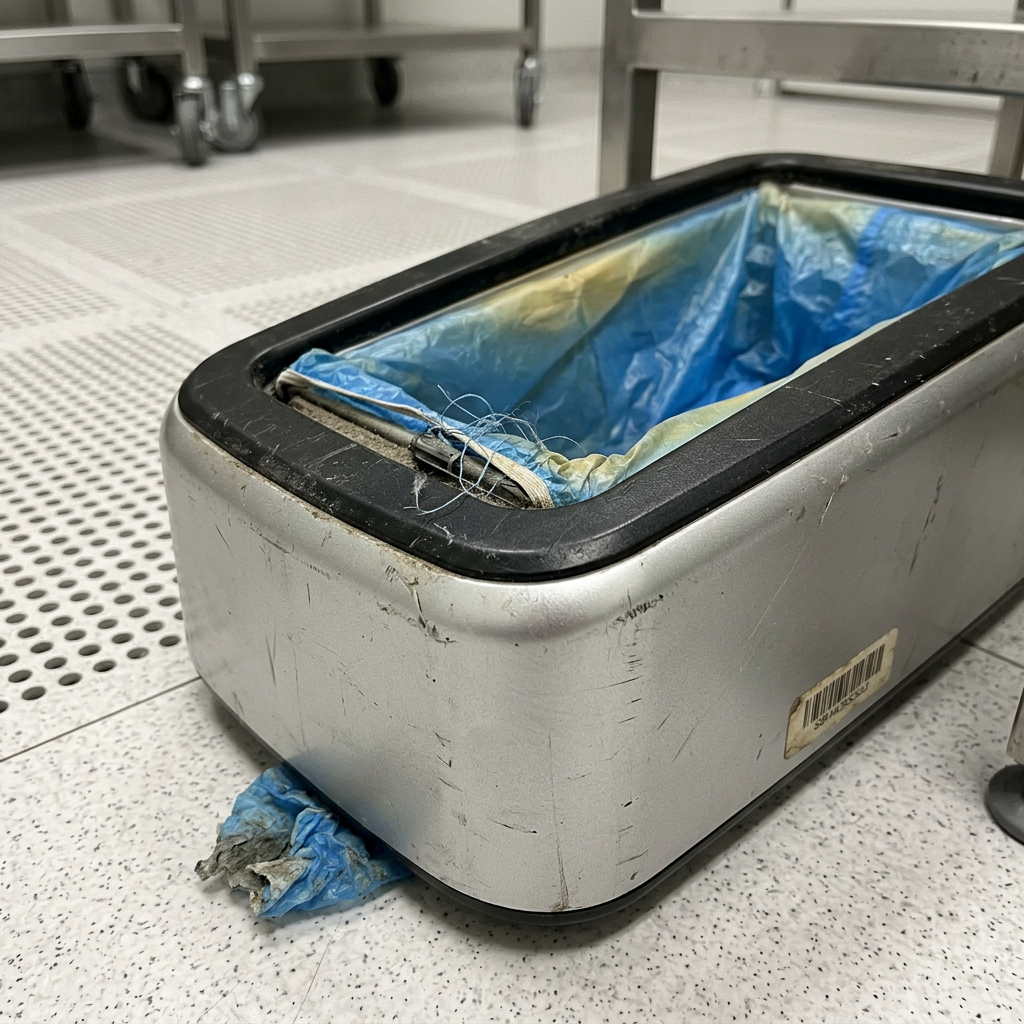
We do not sell disposable covers or automatic dispensers. We help your team compare what you manage today with what UVZone® requires at the entry.
AUTOMATIC DISPENSERS
An Automatic Dispenser Changes How Your Team Applies Covers
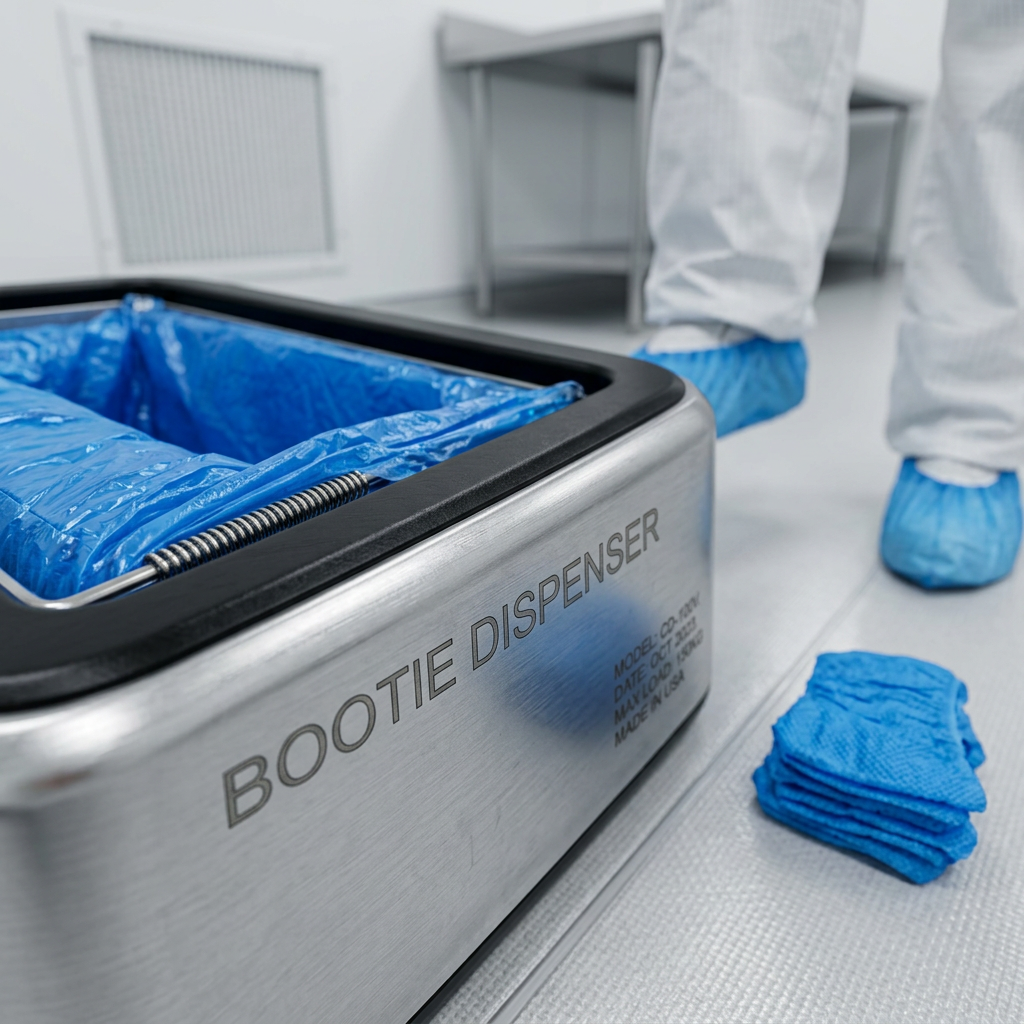
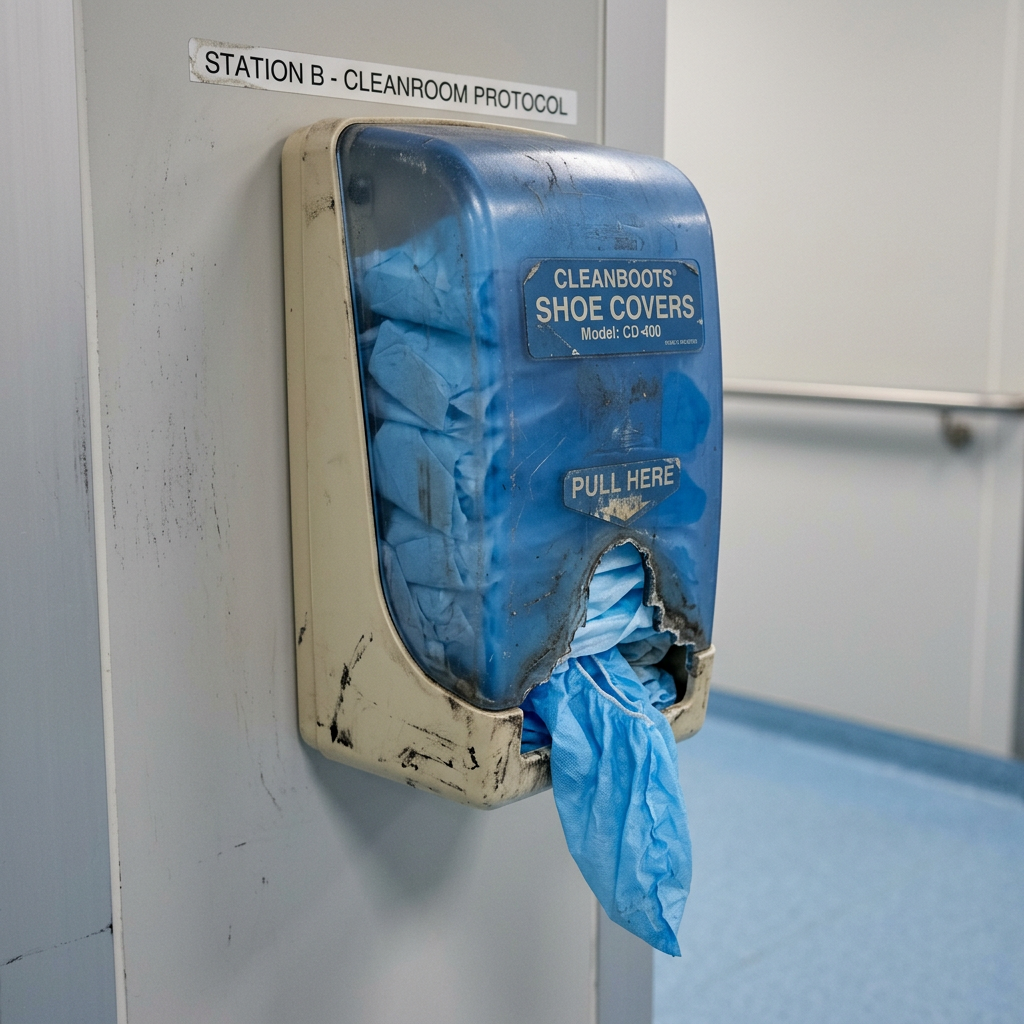
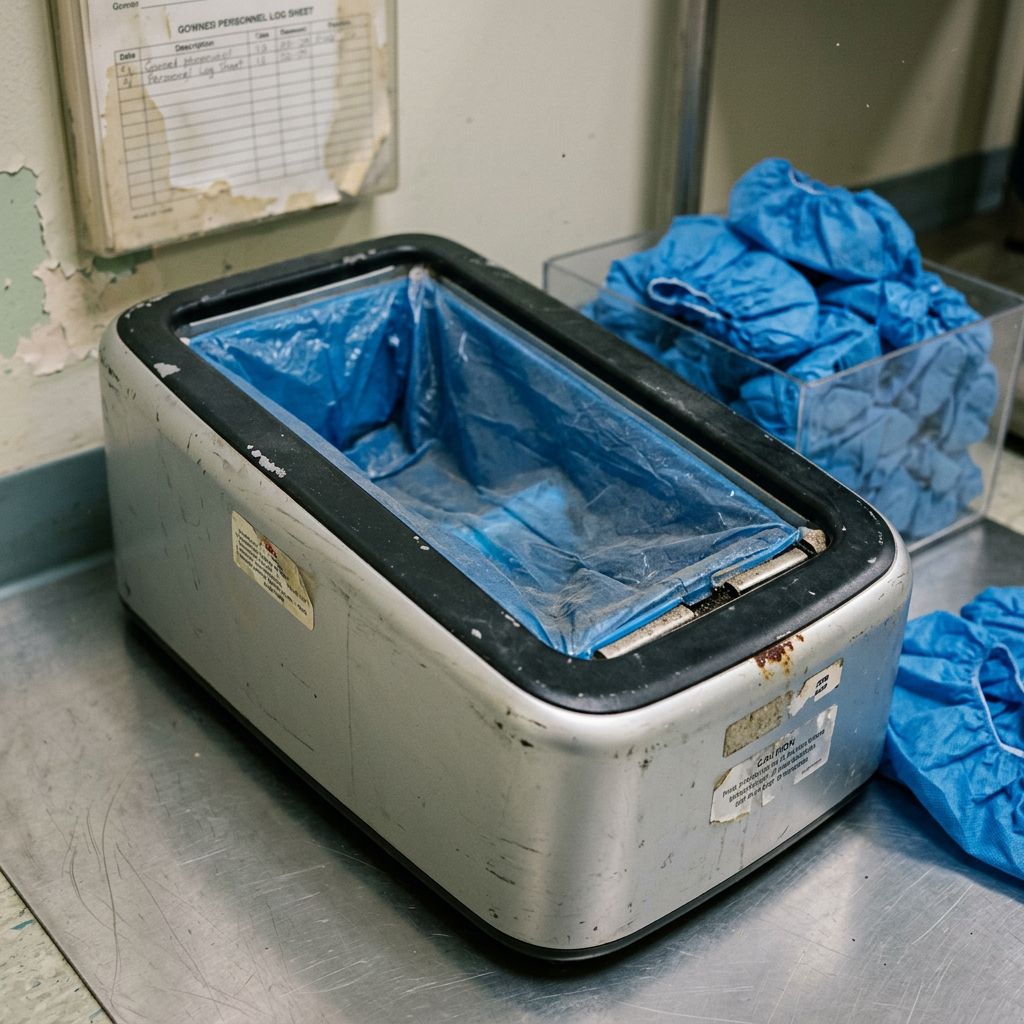
An automatic shoe cover dispenser can change how a cover is presented and applied. Your facility still purchases, stores, sizes, restocks, removes, collects and disposes of the covers used at the entry.
When your team evaluates a dispenser, we recommend comparing the dispenser, recurring cover supply, storage, restocking, user throughput, maintenance, floor space and waste-management requirements.
Our UVZone® station uses a different process. The user steps onto the fixed station and completes an automatic shoe-sole treatment cycle without retrieving, applying, removing or discarding a disposable cover as part of the UVZone® cycle.
Your dispensers still depend on cover supplies
Your team must still purchase, store, size, restock, monitor and replace the covers used at each participating entry.
We compare your full entry process
We include dispenser purchase, service, maintenance, floor space, throughput, waste handling and every cover or PPE step your approved procedure still requires.
OUR UVZONE® STATION
How UVZone® Operates at Your Entry
Our UVZone® station remains at the selected entry and provides an automated treatment step for the bottom surfaces of footwear.
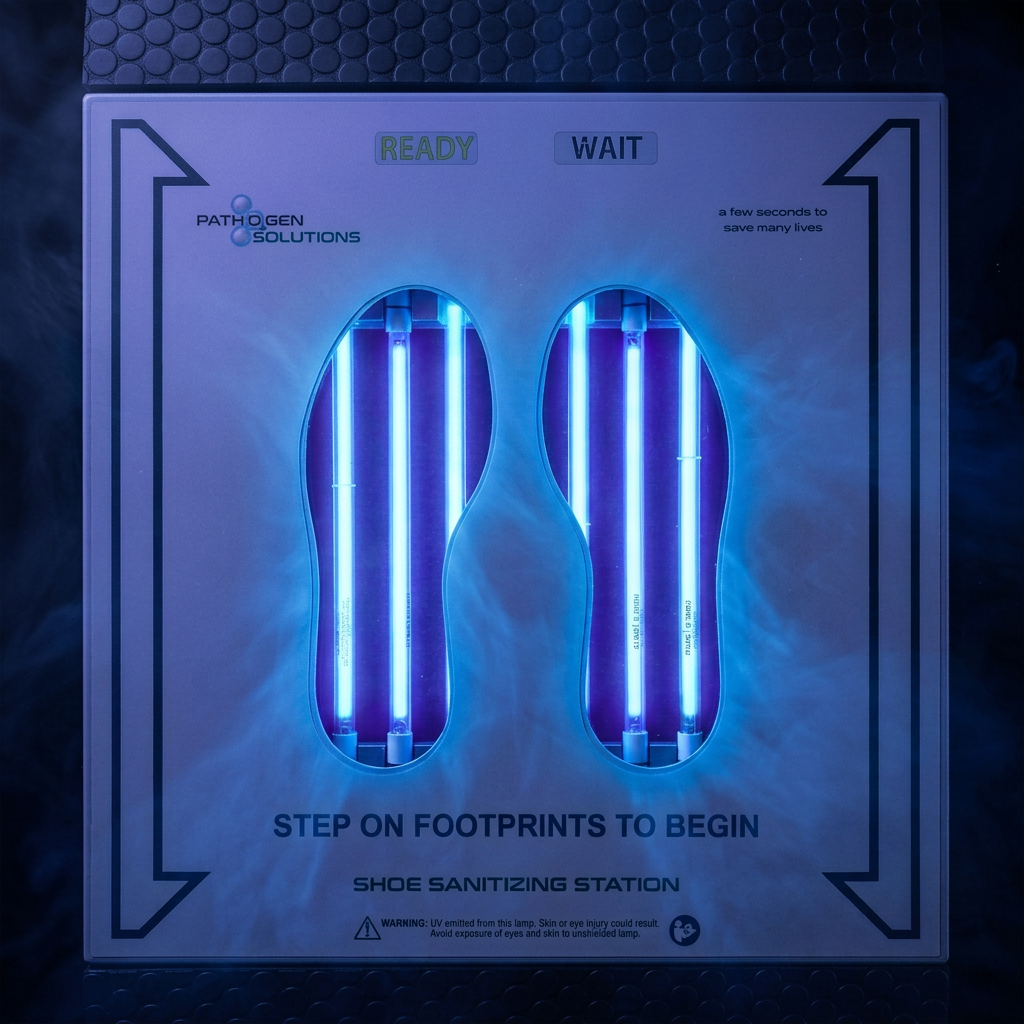
The user positions both feet on the station. Automatic weight sensors activate the selected 6, 8, or 10-second treatment cycle. UV-C light and ozone treat both shoe soles during the cycle, and visual and audible indicators tell the user when the cycle is complete.
The UVZone® treatment cycle does not create a used disposable cover.
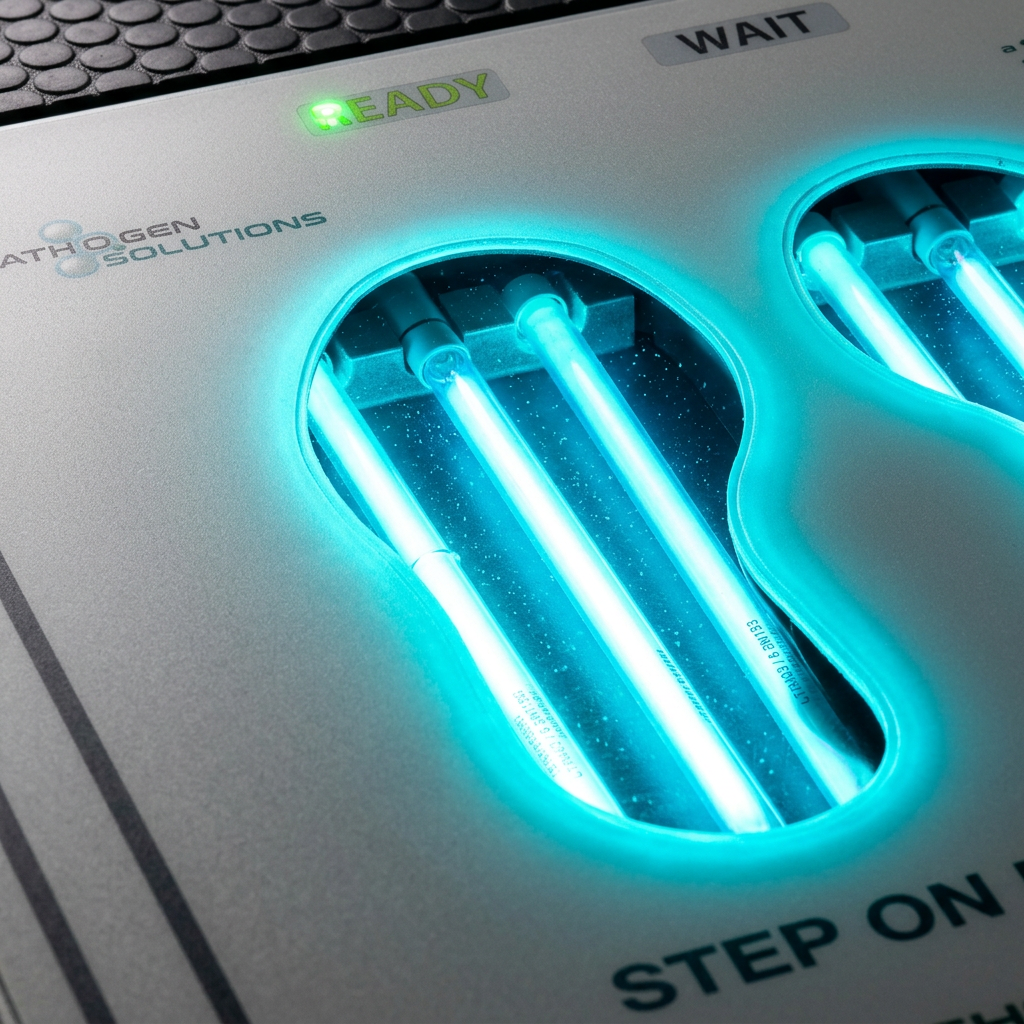
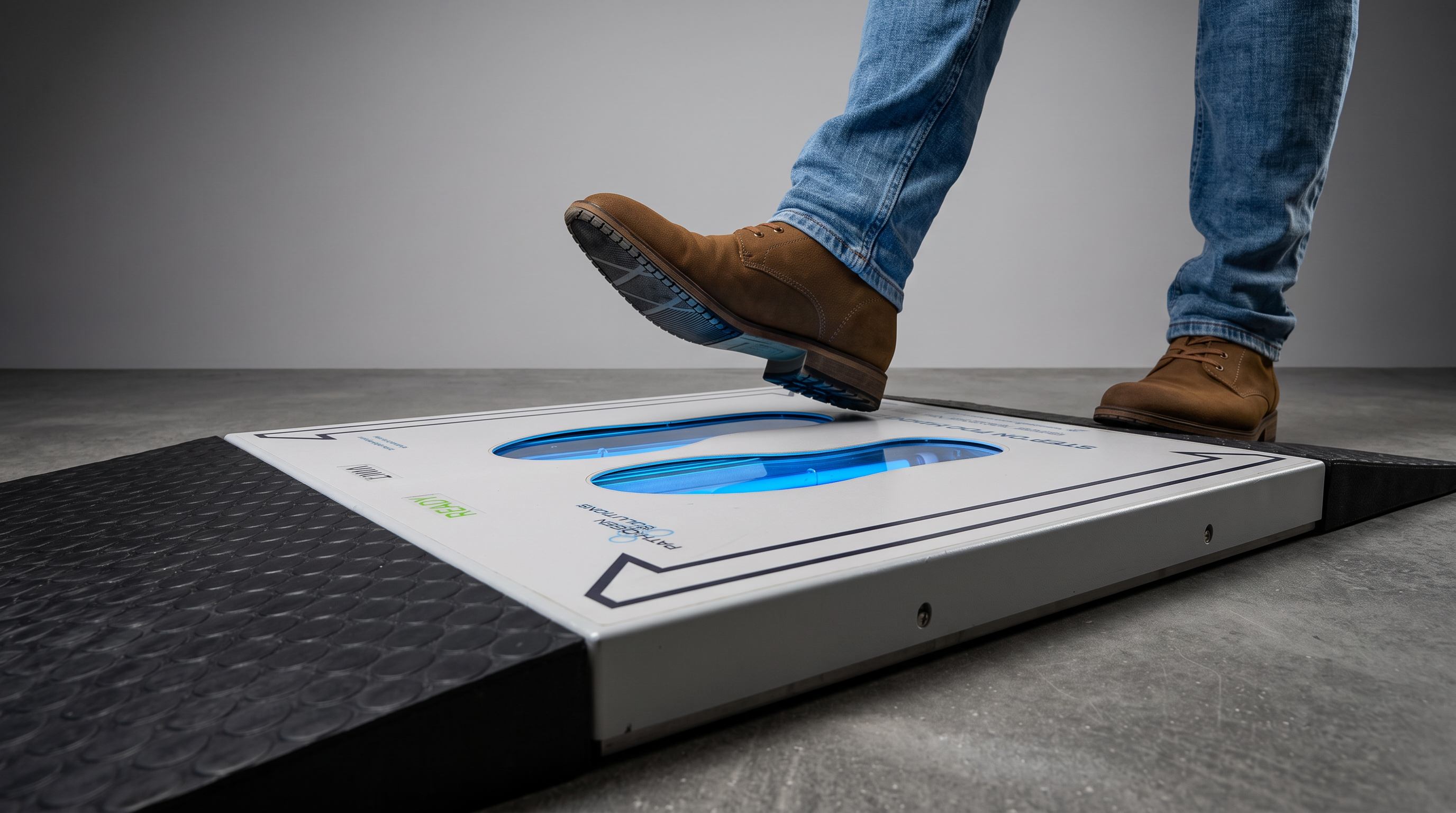
UVZone® provides one timed treatment step.
Both shoe soles are treated during the same activated cycle. The user remains on the station until the completion signal indicates the cycle has ended.
Our cycle does not use a disposable cover.
UVZone® does not require personnel to retrieve, apply, remove or discard a disposable cover as part of its treatment cycle.
UVZone® has placement and operating requirements.
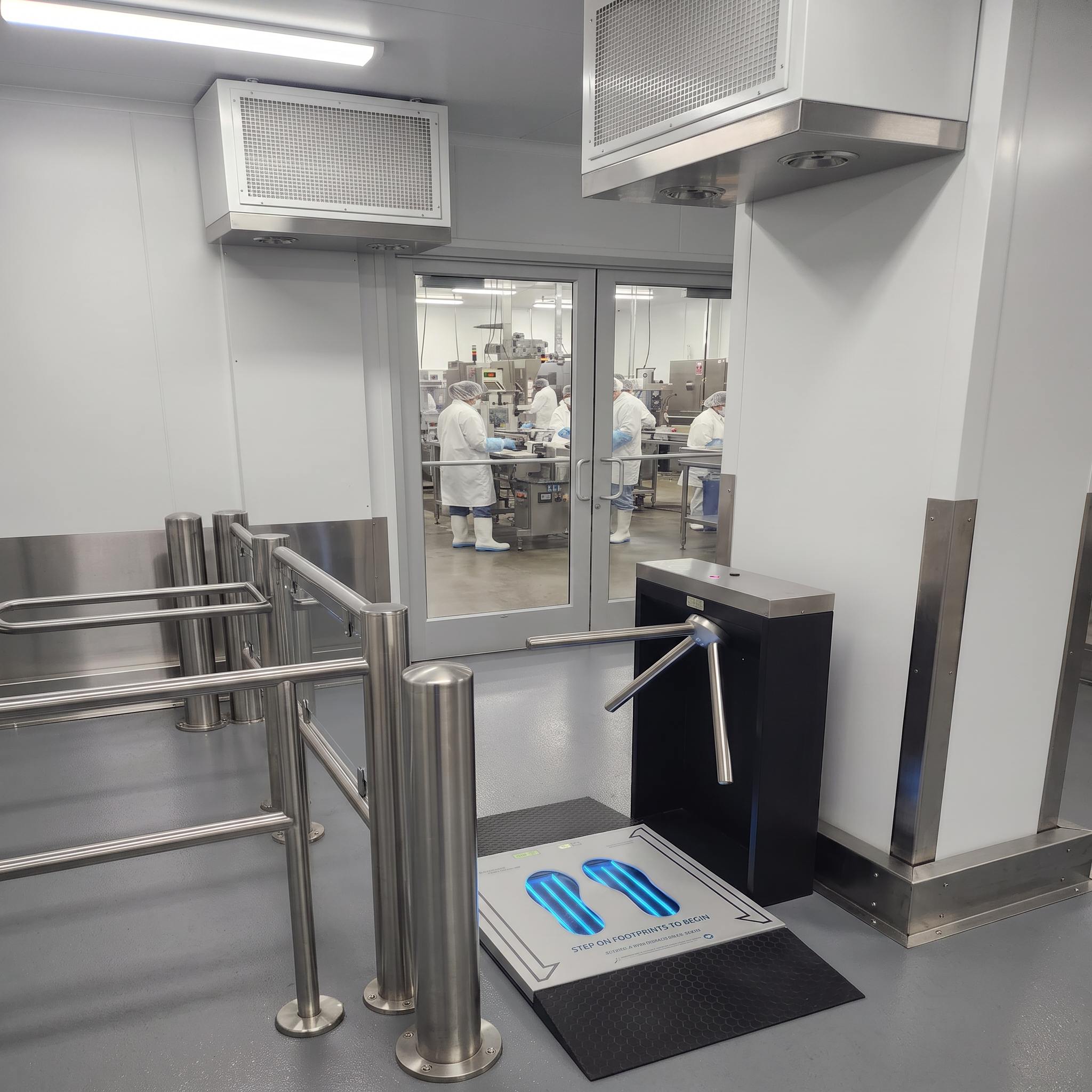
We help your team review floor space, walking path, electrical access, ventilation, placement, inspection, cleaning, lamp, service and maintenance before installation.
Your facility procedure still controls the entry.
UVZone® must be operated and maintained according to the current Instructions for Use and the procedures your team approved for your facility.
Your facility decides where shoe covers and required PPE must remain in use.
PROCESS COMPARISON
Compare the Work Your Employees Must Complete at Your Entry Points
We compare the full operating process at your entry. We look at what each method does, what your facility must supply and what personnel must complete during every use.
UVZone® does not replace required PPE or another facility control.
COST REVIEW
Use Your Actual Cover Process to Build the Comparison
We would love the opportunity to show you a better way.
We build the comparison from your actual operating information. General assumptions cannot establish what your facility spends or whether a change will produce savings.
A typical review includes:
- 1Cover use during the period you select.
- 2Purchase price for each cover type and size you buy.
- 3Shipping, storage and inventory requirements.
- 4Restocking and monitoring labor.
- 5Replacement of damaged or incorrectly applied covers.
- 6Collection and disposal requirements.
- 7Automatic dispenser purchase, service and maintenance costs.
- 8Our UVZone® equipment, implementation, operating and maintenance costs.
- 9Every cover, garbing and PPE requirement that will remain in your procedure.
Our Sales team can prepare a comparison using current approved pricing and documented assumptions.
Pricing, savings and return on investment depend on facility-specific costs, procedures, traffic and approved commercial information. No financial result is guaranteed.
START WITH ONE ENTRY
Compare the Door You Are Already Managing
You do not need to begin with a facility-wide recommendation. We start with the doorway or transition your team is evaluating.
Tell us who uses the entry, why covers are required, how they are supplied, how often they change and which garbing or PPE steps must remain.
We help your team compare your cover process with the placement, operation and maintenance requirements of our UVZone® station.
Your facility remains responsible for approving any change to its procedures.
Step 1
Start with your entry.
Tell us which employees, visitors, contractors or production personnel use it and where they go after passing through.
Step 2
Walk us through your cover process.
Tell us which covers you use, how they are supplied, how often they change and how your team manages stocking, removal and disposal.
Step 3
We review our UVZone® requirements with you.
We provide our product information, placement guidance, operating requirements, maintenance expectations and the technical documentation your team needs.
OUR PRODUCT AND LAB DATA
Review Our Product and Laboratory Documentation
Independent laboratory testing demonstrated that our UVZone® station reduced specified microorganisms on tested carriers under defined treatment conditions.
Results vary by organism, treatment time, carrier and study method. Laboratory testing does not guarantee a facility-wide contamination, infection, compliance, operational or financial outcome.
We can provide our approved product information and laboratory documentation for your team to review.
COMMON QUESTIONS
Questions Facilities Ask About Shoe Covers and UVZone®
Does UVZone® replace disposable shoe covers?
UVZone® does not automatically replace disposable shoe covers. Your facility determines where covers, garbing and personal protective equipment remain required. We can help you evaluate UVZone® as a shoe-sole treatment step at an appropriate entry within your facility's approved procedures.
Does UVZone® perform the same function as a shoe cover?
No. A disposable cover creates a temporary physical barrier over footwear. UVZone® treats the bottom surfaces of footwear during an activated UV-C and ozone cycle.
Can UVZone® replace an automatic shoe cover dispenser?
Your facility must first determine why covers are required at the entry. If your approved procedure requires a physical barrier, garbing step or personal protective equipment, that requirement remains. We can help you evaluate UVZone® for the shoe-sole treatment role within your approved facility process.
Will UVZone® reduce our shoe-cover costs?
A valid comparison requires your facility's actual cover use, purchase prices, labor, storage, waste, dispenser costs, procedures and the controls that will remain in place. Our Sales team can prepare a comparison using current approved pricing and documented assumptions. No savings or return on investment is guaranteed.
How long is the UVZone® treatment cycle?
UVZone® uses a selected 6, 8, or 10-second treatment cycle. Both shoe soles are treated during the same activated cycle.
Does UVZone® require maintenance?
Yes. Our equipment has inspection, cleaning, lamp, service and maintenance requirements described in the current Instructions for Use. It must not be described as maintenance free.
Can we review the laboratory documentation?
Yes. We can provide approved study summaries or full reports as appropriate. We will identify the organisms, treatment conditions, laboratory and report information relevant to the material you receive.
How many UVZone® stations will our facility need?
The appropriate quantity and placement depend on your entrances, controlled transitions, traffic flow, operating procedures and intended application. We review your facility before recommending a configuration.
REQUEST A COVER PROCESS REVIEW
Tell Us How Your Cover Process Works
Tell us how your cover process works. We will compare the operating requirements.
Share the entry, the reason covers are required, the number of people using the area and the recurring work your team manages. We will review our UVZone® requirements while keeping every cover, garbing and PPE step your approved procedure requires.
Talk With Our Team About Your Cover Process
Share the entry and disposable cover process your facility is evaluating. We will follow up to discuss your current requirements and our UVZone® operating requirements.